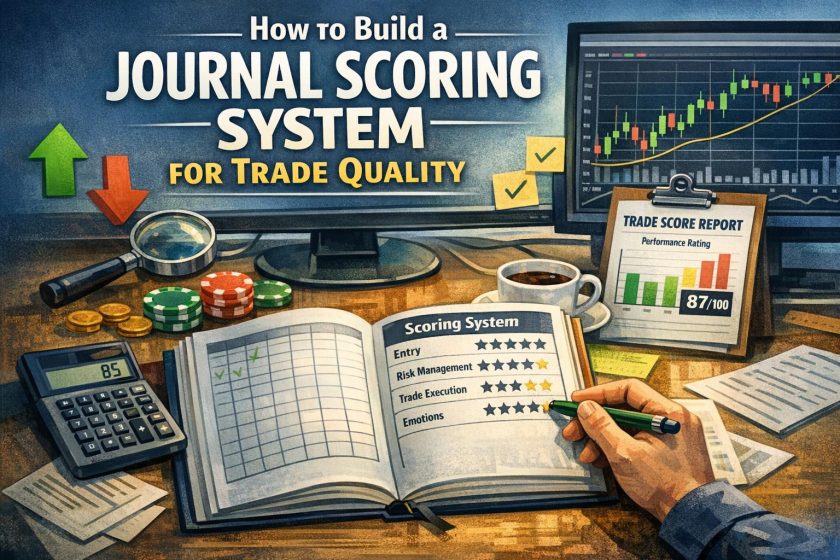
Understanding the Need for a Journal Scoring System
In the realm of trading, maintaining a detailed journal is widely recognized as a disciplined approach to recording decisions, market context, and performance outcomes. Many traders document entry and exit points, chart patterns, indicators used, and thoughts during execution. However, merely documenting past trades does not automatically translate into improvement. Data without structured evaluation often becomes an archive rather than a development tool. A journal scoring system addresses this limitation by transforming descriptive records into measurable performance indicators.
A structured scoring system provides a framework for assessing the quality of each trade independent of its financial outcome. A profitable trade executed with poor discipline may reinforce bad habits if evaluated only by its return. Conversely, a well-executed trade that results in a loss due to unpredictable market movement may reflect strong process adherence. By introducing a systematic method of evaluation, traders can differentiate between outcome-based success and process-based competence.
The primary reason for implementing a scoring system lies in its ability to convert subjective assessments into structured metrics. Trading involves decision-making under uncertainty, influenced by analysis, probabilities, and behavioral discipline. Without numerical structure, self-evaluation can become inconsistent. A scoring system introduces repeatable criteria that allow traders to track progress over time and identify structural weaknesses in their approach.
Beyond performance measurement, a scoring framework enhances accountability. When traders know that each trade will be evaluated against predefined criteria, the level of preparation and discipline often improves. This shift from reactive trading to rule-based execution forms the structural basis of continuous performance development.
Components of a Journal Scoring System
An effective journal scoring system incorporates multiple dimensions of trade evaluation to reflect the complexity of market decision-making. Rather than focusing solely on entry timing or profitability, it assesses each stage of the trade lifecycle. The depth of evaluation should align with the trader’s strategy, frequency, and market specialization.
Entry and Exit Strategy is a core component of any scoring methodology. Evaluation in this category examines whether the trade followed predefined entry rules, whether confirmation signals were present, and whether execution occurred at the intended technical or fundamental level. Similarly, exit performance is assessed by determining whether take-profit and stop-loss levels were respected, adjusted appropriately, or overridden without justification. This component evaluates adherence to plan rather than profitability.
Risk Management forms another central pillar. Effective scoring in this area analyzes position sizing accuracy, proportional exposure relative to account equity, and risk-to-reward structure at the time of entry. It also evaluates whether stop-loss placement was logical within market structure and whether risk parameters were modified during the trade without strategic reasoning. Since risk discipline often determines long-term sustainability, this component typically carries substantial weight.
Emotion Control addresses behavioral factors that influence trade execution. Emotional influences may include hesitation, impulsive entry, fear-driven exit, revenge trading, or overconfidence after a series of wins. While emotions cannot be eliminated from trading, they can be evaluated for their influence. Scoring in this category requires honesty and structured criteria to prevent bias. By assigning measurable ratings to behavioral discipline, traders integrate psychological awareness into performance tracking.
Market Analysis evaluates the preparation phase prior to execution. This includes assessment of broader trend direction, volatility conditions, macroeconomic context if applicable, and technical signal alignment. The objective is to measure the thoroughness and logical coherence of pre-trade preparation. A strong analytical process does not guarantee a successful trade, but it supports consistent decision-quality.
Additional components may be introduced depending on strategy complexity. For example, swing traders might include time-frame alignment as a separate category, while intraday traders may assess execution speed or slippage management. The objective is not to expand categories excessively, but to ensure that all meaningful aspects of decision-making are captured.
Weighting of these components should reflect strategic priorities. A high-frequency trader may emphasize execution precision more than long-term macro alignment, while a position trader may assign greater importance to analytical depth. Establishing weights ensures that the scoring system remains aligned with the core structure of the strategy rather than applying generic standards.
Developing a Scoring Methodology
Once components are defined, the next step involves constructing a consistent scoring structure. The methodology must translate qualitative evaluation into numerical form while maintaining clarity. A common approach is to assign each component a fixed scale, such as 1 to 5 or 1 to 10. The scale should represent clearly defined performance benchmarks to preserve consistency.
For instance, within the risk management category, a score of 10 might indicate perfect adherence to position sizing rules and stop placement aligned with predefined parameters. A score of 5 might indicate partial deviation, such as minor rule bending. A score of 1 might reflect a complete abandonment of risk controls. Defining these benchmarks in advance prevents inconsistent grading based on mood or outcome.
Weighted averages allow traders to combine component scores into a single composite rating. The weighted formula multiplies each component score by its assigned importance percentage before calculating a total. This ensures that critical aspects, such as risk management or plan adherence, exert greater influence than secondary considerations.
The composite score serves multiple analytical purposes. It enables comparison between trades, calculation of weekly or monthly performance averages, and identification of trends in behavioral discipline. Over time, traders can analyze correlations between composite scores and profitability. Unexpected findings may emerge. For example, some traders may discover that low-scoring trades occasionally produce high returns, indicating potential statistical edge not fully understood. Others may find consistent profitability only when composite scores exceed a defined threshold.
Beyond individual trade scoring, grouping trades by score range enhances insight. Comparing outcomes of high-rated trades versus low-rated trades can reveal whether discipline aligns with performance results. Such analysis strengthens strategic decision-making rather than relying on anecdotal impressions.
Separating Process Quality from Outcome Quality
One of the most significant advantages of a journal scoring system is the separation of process quality from financial outcome. Markets contain inherent randomness, and short-term profitability does not always reflect decision accuracy. Without structured evaluation, traders may incorrectly reinforce flawed strategies after a series of fortunate wins or abandon sound approaches after isolated losses.
By assigning scores based on rule adherence and preparation quality, traders build a record of process integrity. Over a sufficiently large sample size, process quality should correlate with outcome consistency if the strategy has an edge. If such correlation fails to emerge, it signals a need for structural strategy review rather than behavioral correction.
This distinction encourages disciplined development. A losing trade with a high process score should be categorized as an acceptable execution within probabilistic expectation. Conversely, a profitable trade with a low process score should be recognized as statistically unreliable. This structured reasoning prevents the distortion of feedback loops.
Separating these dimensions also enables refinement of performance reviews. Instead of labeling periods as “good” or “bad,” traders can identify whether issues stem from analytical inaccuracies, emotional interference, or statistical variance within a sound framework.
Incorporating Feedback Loops
An effective scoring system requires ongoing evaluation rather than isolated data entry. A feedback loop involves periodic review of scored trades to extract patterns and implement adjustments. Weekly reviews may focus on behavioral consistency, while monthly reviews can assess structural metrics such as average composite score, average risk exposure, and rule deviation frequency.
During review sessions, traders should analyze discrepancies between intentions and actions. For example, if emotion control scores consistently lag behind analytical scores, the issue may not involve strategy design but psychological resilience. If market analysis scores fluctuate widely, it may indicate insufficient preparation routines or unclear signal criteria.
Quantitative summaries enhance review quality. Calculating averages for each scoring component over a defined period provides insight into strengths and weaknesses. Standard deviations of scores may reveal volatility in discipline. Identifying these statistical patterns supports systematic improvement rather than reactive adjustments.
Feedback loops also facilitate progressive refinement of the scoring criteria itself. As strategies evolve, evaluation standards may require adjustment. However, changes should be implemented cautiously to maintain longitudinal comparability. Documenting any modification to scoring methodology ensures transparency and analytical continuity.
Technological Tools and Automation
Modern technology supports automated scoring frameworks that reduce administrative burden. Spreadsheets can be structured with predefined formulas that compute weighted averages automatically. Dropdown menus can standardize component grading, minimizing ambiguity. Conditional formatting can visually highlight low-scoring trades or rule violations.
More advanced traders may employ database software or programming languages to integrate trade execution data directly into the journal. Automated importing of entry price, exit price, and risk parameters eliminates manual recording errors. Scripts can calculate metrics such as risk-to-reward ratios, drawdown levels, and time-in-trade statistics.
Automation enhances objectivity by limiting discretionary modification during evaluation. Predefined criteria embedded in formulas reduce the risk of retrospective bias. For instance, a system can flag any trade where position size exceeded a preset threshold, automatically reducing the risk management score.
Technological integration also enables longitudinal analytics. Aggregated performance dashboards can display trends in composite scores, correlations between discipline and profit factors, and distribution of outcomes based on process quality tiers. These visual representations support strategic refinement grounded in measurable evidence.
Despite these advantages, automation should complement rather than replace qualitative reflection. Numeric scoring provides structure, but contextual reflection helps interpret behavioral subtleties. Combining quantitative automation with written commentary yields balanced performance analysis.
Ensuring Objectivity and Consistency
Objectivity represents one of the most challenging aspects of journal scoring. Because traders evaluate their own performance, cognitive biases may distort grading. Hindsight bias, confirmation bias, and outcome bias frequently influence retrospective assessments. A clear scoring rubric reduces susceptibility to these distortions.
Developing standardized descriptions for each scoring level strengthens consistency. For example, instead of assigning broad numeric ranges, each number can correspond to observable criteria. A score of 8 in risk management might require full compliance with position size rules plus precise stop placement within the predefined volatility band. Such clarity minimizes discretionary interpretation.
One effective method of improving objectivity involves delayed scoring. Rather than grading immediately after trade closure, traders may wait a defined cooling period. This reduces emotional influence and enhances accuracy in self-assessment.
If multiple traders within a firm or trading group implement the same journal scoring system, standardized training becomes essential. Shared understanding of scoring definitions ensures comparability across data sets. Internal audits or peer reviews can further reinforce uniform application.
Consistency also involves maintaining scoring discipline during periods of high profitability or drawdown. Traders may unconsciously inflate scores during winning streaks or deflate them during losses. Regular cross-checking of numeric ratings against measurable rule adherence helps counteract emotional influence.
Long-Term Benefits of a Journal Scoring System
Over extended periods, the cumulative value of a structured scoring framework becomes increasingly evident. The system generates a dataset that reflects not just financial returns but behavioral patterns, risk discipline, and analytical rigor. This multidimensional perspective supports strategic stability.
Patterns identified through scoring data can inform strategic optimization. For example, traders may discover that trades executed during specific market regimes consistently receive lower analysis scores and produce weaker outcomes. This insight may justify restricting activity during certain volatility conditions. Alternatively, traders may find that entry precision scores strongly correlate with higher risk-adjusted returns, encouraging refinement of signal timing.
A well-maintained scoring system also promotes strategic patience. When traders observe high composite scores despite short-term losses, they may maintain confidence in their framework. Conversely, declining scores can serve as early warning signals even before financial performance deteriorates.
In institutional contexts, scoring systems support compliance and accountability. Structured documentation helps demonstrate rule-based execution and disciplined risk governance. This analytical transparency enhances operational robustness.
Refining the System Over Time
A journal scoring system should not remain static indefinitely. As market conditions evolve and trader experience increases, scoring categories and weightings may require recalibration. However, modifications should be incremental and documented to preserve data integrity.
Periodic meta-analysis of the scoring system itself can reveal inefficiencies. If certain categories consistently provide little differentiation between trades, they may require refinement. Conversely, emerging behavioral issues may necessitate new evaluation dimensions.
Continuous refinement ensures that the scoring framework remains aligned with strategy evolution. However, excessive modification should be avoided, as it can compromise comparability across historical data. Balance between adaptability and stability is essential.
Conclusion
Building a journal scoring system involves thoughtful structuring of evaluation criteria, disciplined application of weighted metrics, and continuous feedback integration. By converting subjective impressions into measurable data, traders gain clearer insight into the true drivers of their performance. The separation of process quality from outcome quality strengthens rational analysis, while technological tools enhance efficiency and objectivity.
When applied consistently, a scoring system transforms a trading journal from a passive record into an active development instrument. Over time, structured evaluation fosters disciplined execution, refined analysis, and improved risk governance. Through ongoing review and measured adjustment, the journal scoring framework becomes an integral component of sustainable trading practice.