Introduction
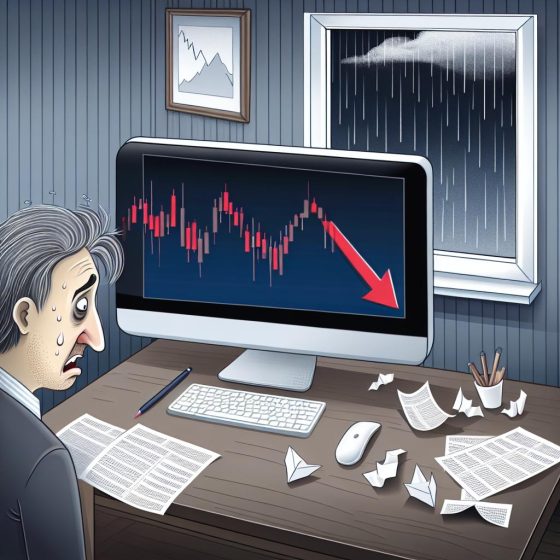
In the dynamic world of trading, market fluctuations can significantly affect financial portfolios. This article delves into a particular incident where a trader lost half of their trading account in a single day. By exploring the underlying reasons for this dramatic loss, we aim to offer insights that may help in preventing similar occurrences in the future.
Background on the Trading Strategy
The trading account in question primarily employed day trading tactics, specifically targeting stocks in the technology sector. Day trading typically involves executing a large number of trades within the same market day to exploit small price fluctuations. This strategy often employs high-frequency trades coupled with leveraged positions, aiming to capitalize on minimal price movements for substantial gains. However, while such a strategy has the potential for significant returns, it also inherently carries heightened levels of risk.
Day trading is not merely about timing the market, but also about making precise and well-informed decisions under pressure. This approach requires a trader to stay constantly alert, closely monitoring news that could impact stock prices, particularly in sectors as volatile as technology. The aggressive nature of this high-paced trading style often leaves little room for error, emphasizing the importance of having a solid risk management plan in place.
Market Volatility
Among the primary contributors to the loss experienced was an unforeseen surge in market volatility. Market sentiment can shift rapidly, often due to economic announcements or geopolitical events that significantly affect stock prices. In the incident being discussed, the market experienced a swift change in sentiment following a negative news release about international trade relations. This triggered a rapid sell-off in technology stocks, which the account heavily depended on.
Fluctuations of this nature are not uncommon; however, they can be particularly damaging if a portfolio is not adequately diversified or prepared for such movements. Traders must acknowledge that with high reward often comes high risk, and volatility is a defining characteristic of the stock market that can either be an ally or an adversary.
Leverage and Margin Calls
A significant factor amplifying the impact of market volatility was the account’s use of leverage. Leverage involves borrowing funds to boost one’s trading position, which can intensify both gains and losses. This particular trading account was highly leveraged, leading to an enhanced reaction to the downturn in the tech sector.
As the stock prices started to plummet, leveraged positions triggered margin calls. A margin call occurs when the value of a trader’s account falls below a broker’s required amount, prompting the trader to either deposit more funds or liquidate positions to cover potential losses. In this scenario, the trader lacked sufficient capital to address the margin calls, leading to the forced liquidation of their positions and exacerbating the financial losses.
Risk Management and Planning
One of the critical shortcomings of this trading endeavor was a lack of comprehensive risk management strategy. Effective risk management is pivotal to trading success and involves measures such as setting stop-loss orders proactively. A stop-loss order directs the sale of a security when it hits a predetermined price, thus acting as a safeguard against significant losses.
Failure to employ these protective measures left the account exposed during rapid price declines. Moreover, diversification in the portfolio and reducing the size of trading positions could have reduced the extent of the losses. By using strategic planning and risk management techniques, traders can position themselves to better withstand sudden market declines.
Psychological Factors
The psychological dimension of trading can substantially influence decision-making processes. Emotional responses such as fear and panic during turbulent market conditions can lead to impulsive choices and a deviation from planned strategies. In the described incident, these emotions led to rash decisions that did not align with the trader’s original plan.
Managing psychological factors is essential for maintaining rationality and discipline during market volatility. This involves recognizing emotional triggers and developing methods to keep them in check, thereby enabling adherence to strategic plans despite external pressures.
Lessons Learned
The incident offers several critical lessons, beginning with acknowledging and accepting the risks associated with high-leverage trading practices. Establishing a robust risk management plan, incorporating stop-loss limits, and ensuring diversification of holdings are all vital strategies to buffer against severe financial setbacks. Another key lesson is the importance of maintaining emotional discipline and sticking to implemented strategies, which are crucial for minimizing the detrimental effects of market volatility.
Conclusion
Experiencing a loss of this magnitude serves as a stark reminder of the inherent risks involved in trading, especially when positions include high leverage. By reflecting on this experience, traders have the opportunity to integrate more effective risk management strategies, thereby better preparing themselves for future market fluctuations. Continued education, along with regular reassessment and adjustment of trading approaches, can aid in achieving more sustainable and less volatile trading outcomes. The lessons gleaned from such experiences should serve to encourage a more informed and cautious approach to day trading, ultimately fostering a more resilient financial strategy.




 Most people do not understand how important it is to
  Lets look at an example. Broker A charges 0.3% trading fee, $9.99 minimum. You will have to pay more than 0.3% fee if you want to purchase stock for less then 3300. Lets pretend that you save $500 every month that you want to invest in stock. You usually divide this money between two stock. This means that each transaction will be worth $250 and you will have to pay the minimum fee of 9.99. That doesn’t sound too bad does it. Well it is. 9.99 means that you pay a 4% trading fee. You have lost 4% the second you purchased the stock. You are going to need to pay another 9.99 if you want to sell the stock. This means that the stock has to go up by 8% for you to break even. This is insane and make it a lot harder to earn money. The fees might eat up your profit for the entire first year.
 The fact that Musk prefers to borrow the money rather than issue new stock can however also be seen as a signal of strength. Musk might feel certain that he will met production goals and that Tesla will be able to start earning a profit in the coming future. If this is the case than he might choose not dilute the stock because he know he isn’t going to need to.
 The large interest for the car is a large opportunity for the company. Musk have said that they can sell as many as they want to. But it also means a large challenge as the company needs to be able to ramp up production from the small production numbers they currently have to more than 10 000 cars a week. If they are able to do this then a lot of nay sayers would be converted and the stock might continue to rise. But Tesla would still be overvalued as they would still be producing and selling less car that other companies with similar valuations such as Ford and GM. This might however not matter as long as Tesla can show that they can continue to grow quickly.
 When I and other investors say that we invest in dividend stock than we are usually referring to companies that have a history of giving the share holders large dividends. Companies that keeps increasing their dividends year after year. Theses stocks are sometimes referred to as dividend kings.


 I currently pay $1200 a month for my 2 bedroom apartment in a central location. The apartment building have a community pool and a gym in the basement. It also offer laundry facilities. A similar house in my area would cost about $260 000. The interest rate on a 260 000 mortgage would be $650 a month, $7800 a year. $650 is lower then the $1200 I presently pay. But there are a lot of cost associated with owning a house.
 This was a big mistake. The stock is now trading around $5 and I have lost almost half of my investment. I have considered buying more shares to lower my average purchase price to make it easier to earn my money back. The problem is that I am no longer sure that this company will go back up. After having done more research into the company (which I should have done before I bought the stock) I am starting to think that blue apron is a black whole you lose money into. A company that have their best times behind them and that will die a slow expensive death. This makes me think that it might be best to to take the loss and move on. Although the stock might make a few jumps before it dies and that would be enough for me to get out of it without losing any money.